Expedition Style & Leadership
The expedition follows a classic expedition-style ascent, incorporating acclimatization rotations, fixed-rope sections, and carefully planned summit strategy. Leadership by an IFMGA/UIAGM-certified guide ensures professional oversight of route conditions, avalanche assessment, weather interpretation, and high-altitude decision-making.
Experienced high-altitude Sherpa support assists with load carrying, route preparation, and camp logistics, while climbers remain actively engaged in all phases of the expedition.
Route Overview
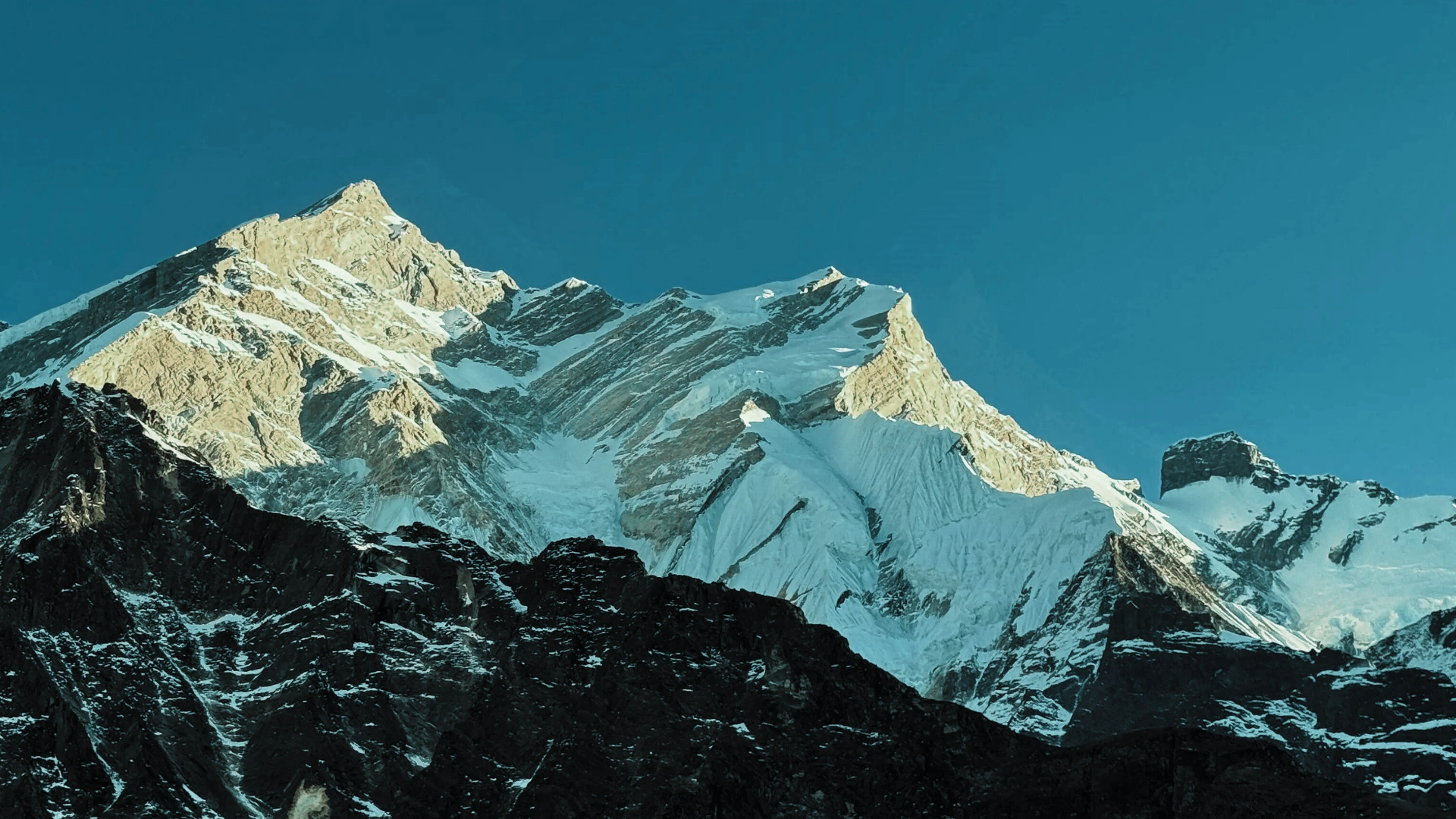
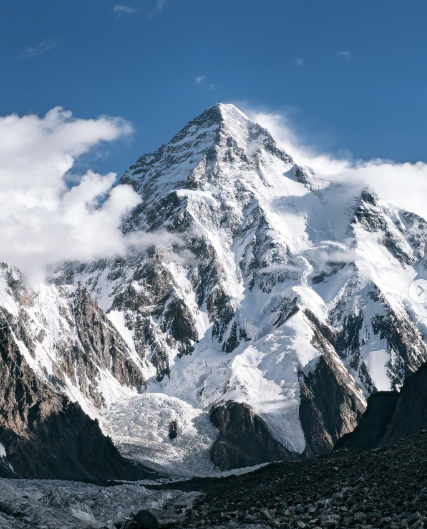
The climb is undertaken via the standard North-West Face route, one of the most avalanche-prone and technically complex routes among Nepal’s 8,000-meter peaks.
Route characteristics include:
-
Glacier travel and crevasse navigation
-
Steep snow and ice slopes
-
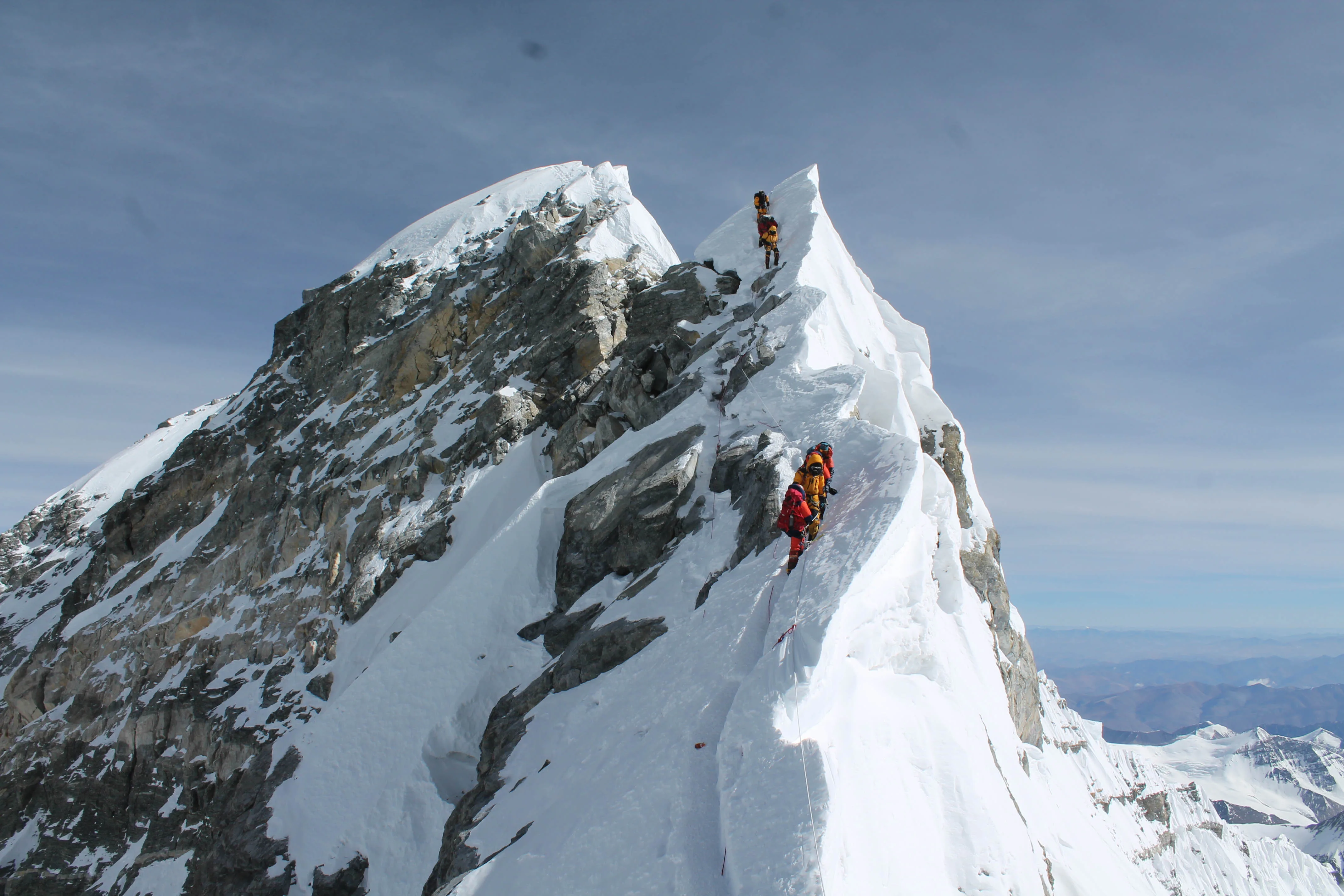
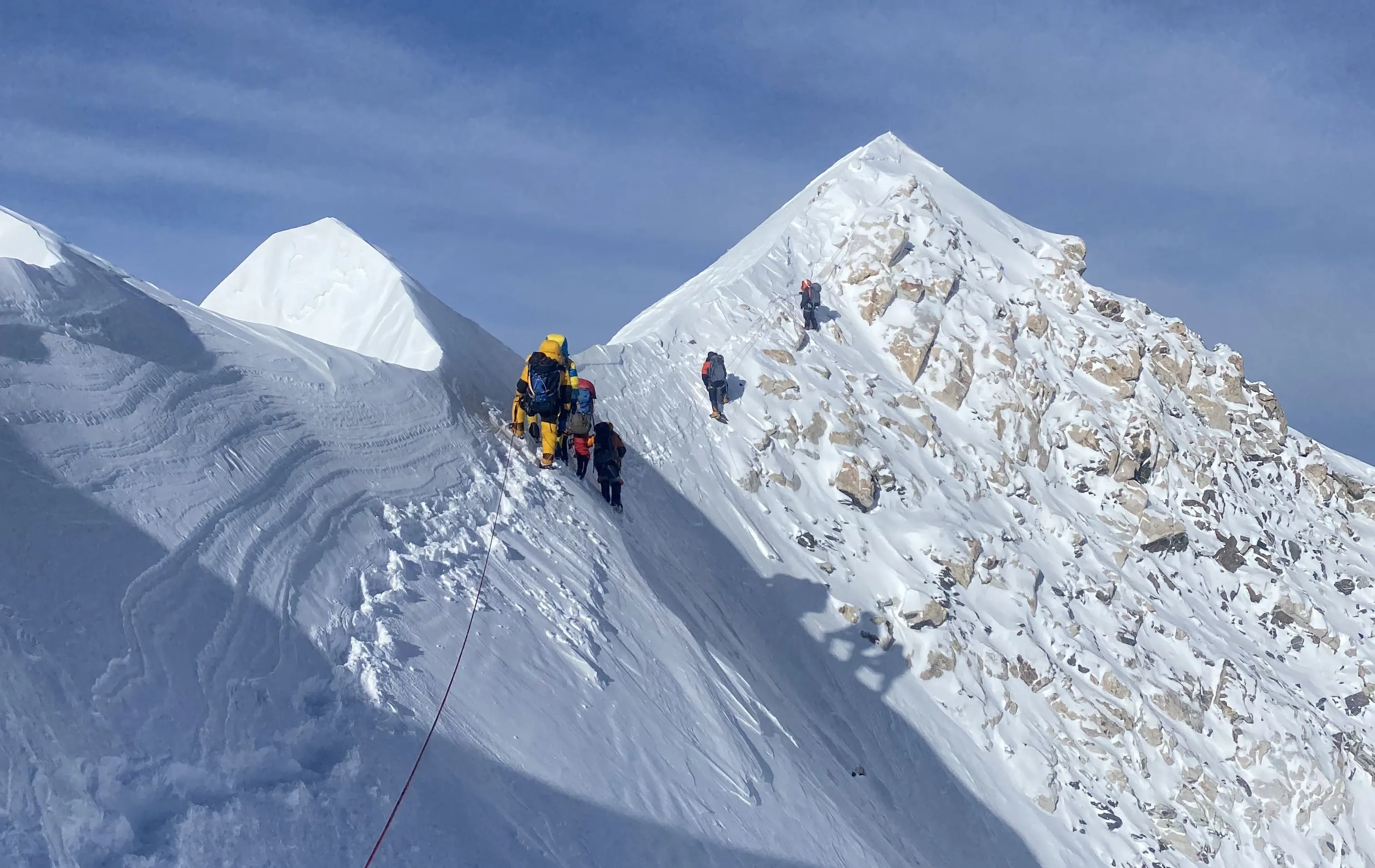
Fixed-rope sections through exposed terrain
-
High objective hazard due to avalanches and serac fall
Multiple high camps are established above base camp to support acclimatization and a carefully timed summit attempt.
Acclimatization, Rotations & Summit Phase
A structured acclimatization program is central to the Annapurna I expedition. Climbers complete several rotations between Base Camp and higher camps, carrying loads, fixing ropes, and spending nights at altitude before descending for recovery.
During these rotations, advanced high-altitude techniques are reinforced, including:
-
Efficient movement on steep terrain
-
Cold-weather and energy management
-
Oxygen strategy (if used)
-
Emergency procedures
Summit attempts are made only when acclimatization is complete and weather conditions align. Summit day is long and demanding, requiring exceptional endurance, focus, and team coordination.
Physical & Technical Requirements
The Annapurna I Expedition is suitable only for highly experienced mountaineers.
Participants must have:
-
Prior experience on 7,000m or 8,000m peaks
-
Strong technical skills in snow, ice, and fixed-rope climbing
-
Excellent cardiovascular fitness and stamina
-
Mental resilience for prolonged exposure to extreme risk
This expedition is not suitable for first-time 8,000m climbers.
Safety & Risk Management
Annapurna I has one of the highest fatality rates among 8,000-meter peaks due to avalanche exposure and objective hazards.
Safety management includes:
-
Continuous weather and avalanche monitoring
-
Conservative route and summit decisions
-
Strict rope and movement protocols
-
Emergency response planning and communication systems
All climbers must carry comprehensive insurance covering high-altitude rescue, medical treatment, and evacuation, and must adhere strictly to expedition protocols.
Approach & Environment
The expedition typically begins with travel from Kathmandu to Beni, following the Kali Gandaki corridor into remote alpine terrain. The region lies within the Annapurna Conservation Area Project (ACAP), the largest protected area in Nepal, known for its biodiversity and dramatic landscapes.
Respect for the environment and local communities is a fundamental part of the expedition.
Who This Expedition Is For
The Annapurna I Expedition is ideal for:
-
Elite high-altitude mountaineers
-
Climbers seeking one of the most serious 8,000m challenges
-
Alpinists with extensive expedition experience
-
Individuals who prioritize IFMGA-led leadership and safety discipline
Why Choose Climb Himalayas for Annapurna I
-
Expedition led by IFMGA/UIAGM-certified mountain guide
-
Highly experienced high-altitude Sherpa support
-
Conservative acclimatization and summit strategy
-
Strong focus on safety, judgment, and expedition integrity
-
Responsible and professional Himalayan operations
A Defining Himalayan Achievement
Climbing Annapurna I is widely regarded as one of the most serious accomplishments in high-altitude mountaineering. Its combination of technical difficulty, avalanche risk, and extreme exposure demands full respect and preparation.
Under expert leadership from Climb Himalayas, this expedition offers a disciplined, professional opportunity to attempt one of the world’s most challenging Himalayan summits—where success is defined by sound decisions as much as reaching the top.