Ice Climbing Training: A Foundation for Achieving Your Mountain Dreams
Ice Climbing Training is a fundamental component of technical mountaineering preparation and a critical step for climbers aiming to progress toward alpine and high-altitude objectives. Whether your goal is to climb technical peaks in the Himalayas, prepare for routes such as Ama Dablam, Lhotse, or other alpine objectives, or develop safe movement on ice and mixed terrain, structured ice climbing training provides the essential skills required for success.
This training focuses on developing technical proficiency, movement efficiency, safety awareness, and mental resilience in frozen environments. Participants learn how to climb confidently on steep ice, manage exposure, and operate safely using modern mountaineering systems. Ice climbing is not only about strength—it is about precision, judgment, and controlled decision-making under demanding conditions.
Beyond technique, ice climbing training builds a strong psychological foundation. Learning to remain calm on vertical ice, manage fatigue, and trust equipment under pressure directly translates to improved performance on technical alpine routes. For many climbers, this training marks the transition from trekking and basic mountaineering to true technical climbing.
Ice climbing training is not an end goal in itself—it is a foundation. With the right instruction and practice, every ice wall becomes preparation for bigger mountains, greater challenges, and long-term mountaineering ambitions.
Training Location – Manang (Humde), Nepal
This ice climbing training is conducted in Humde, Manang, a high-altitude village in Nepal’s Annapurna region, located at approximately 3,300 meters. Humde is known for its cold alpine climate and natural ice formations, making it one of the best locations in Nepal for realistic ice climbing training.
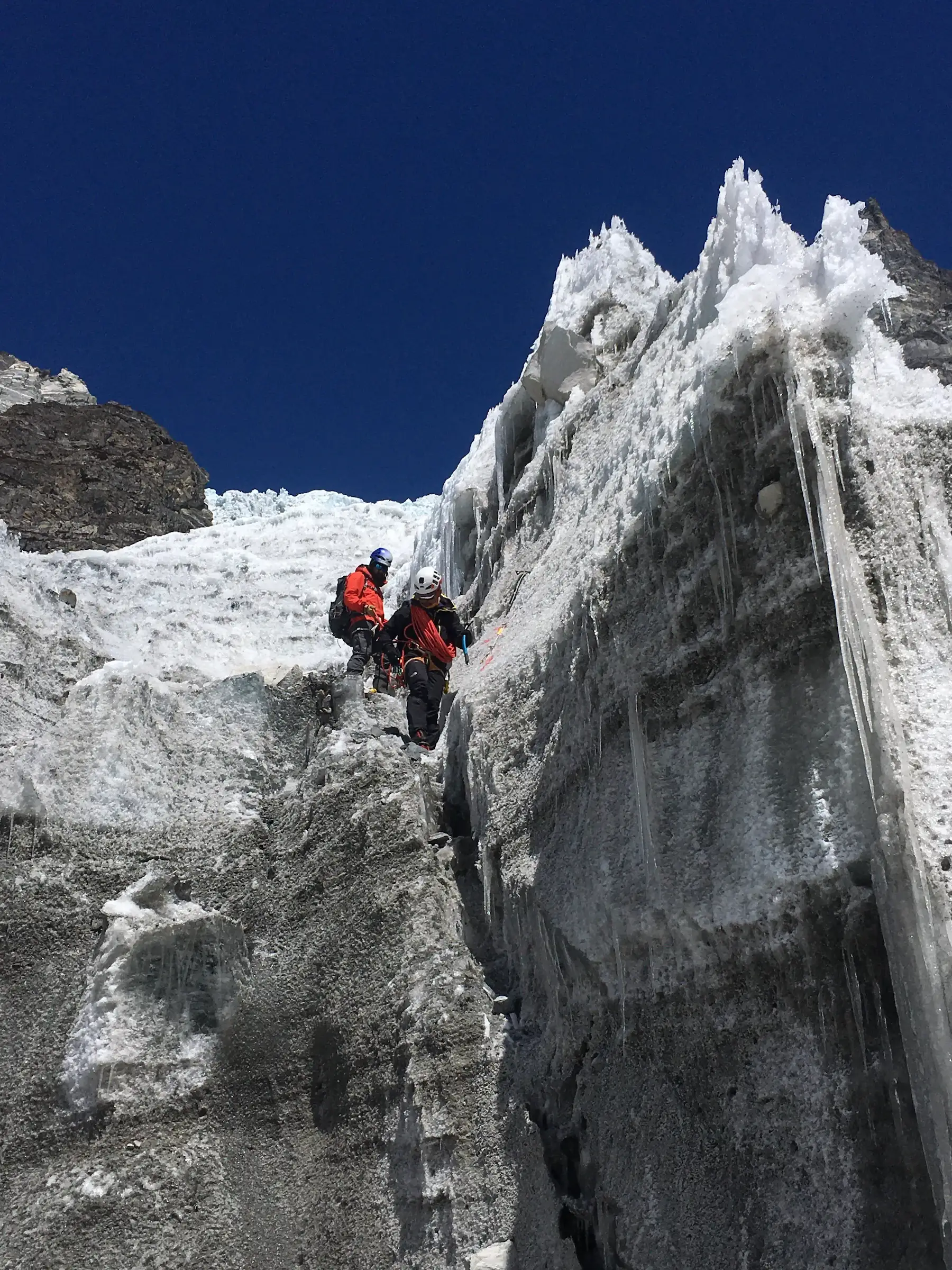
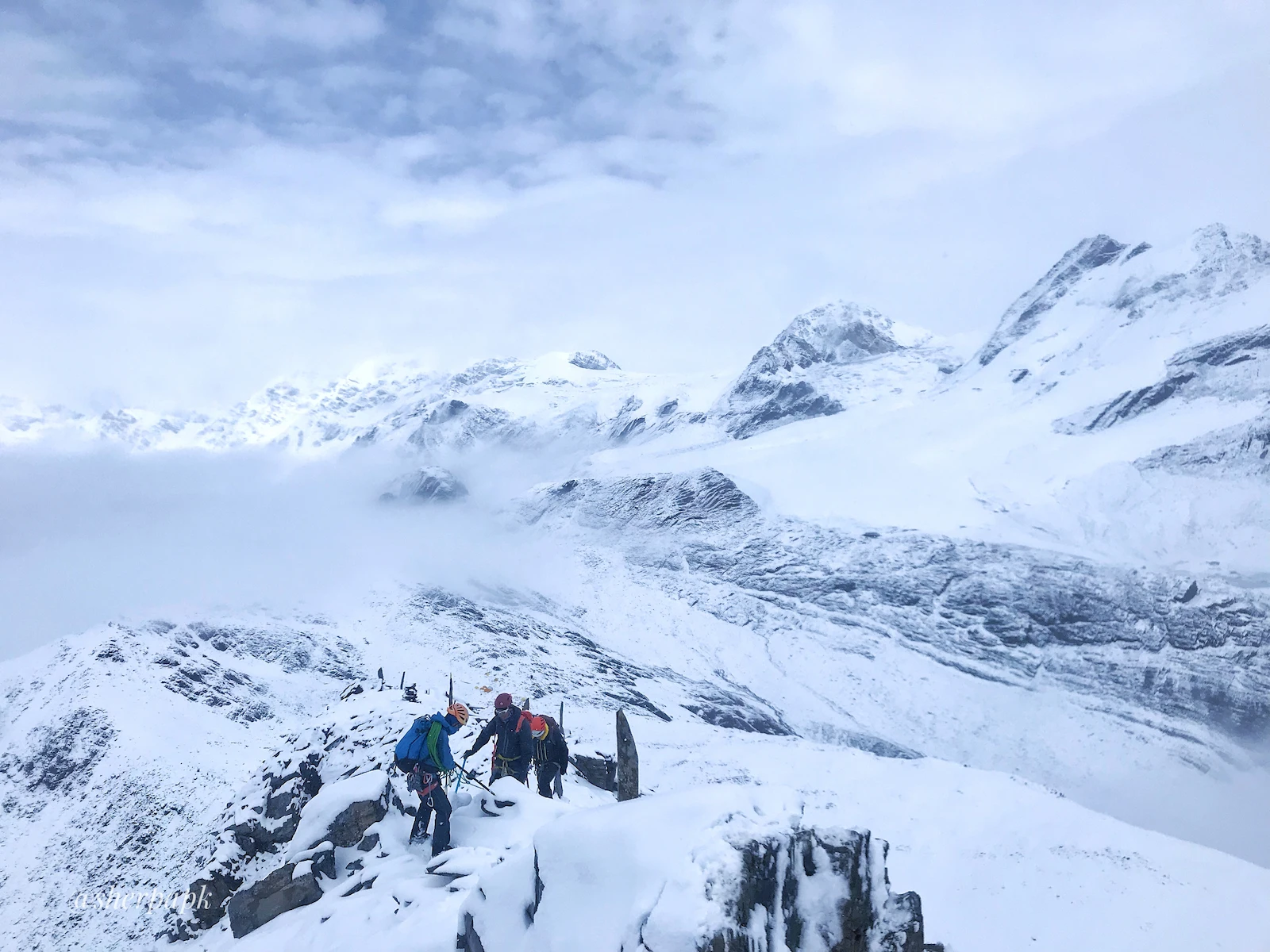
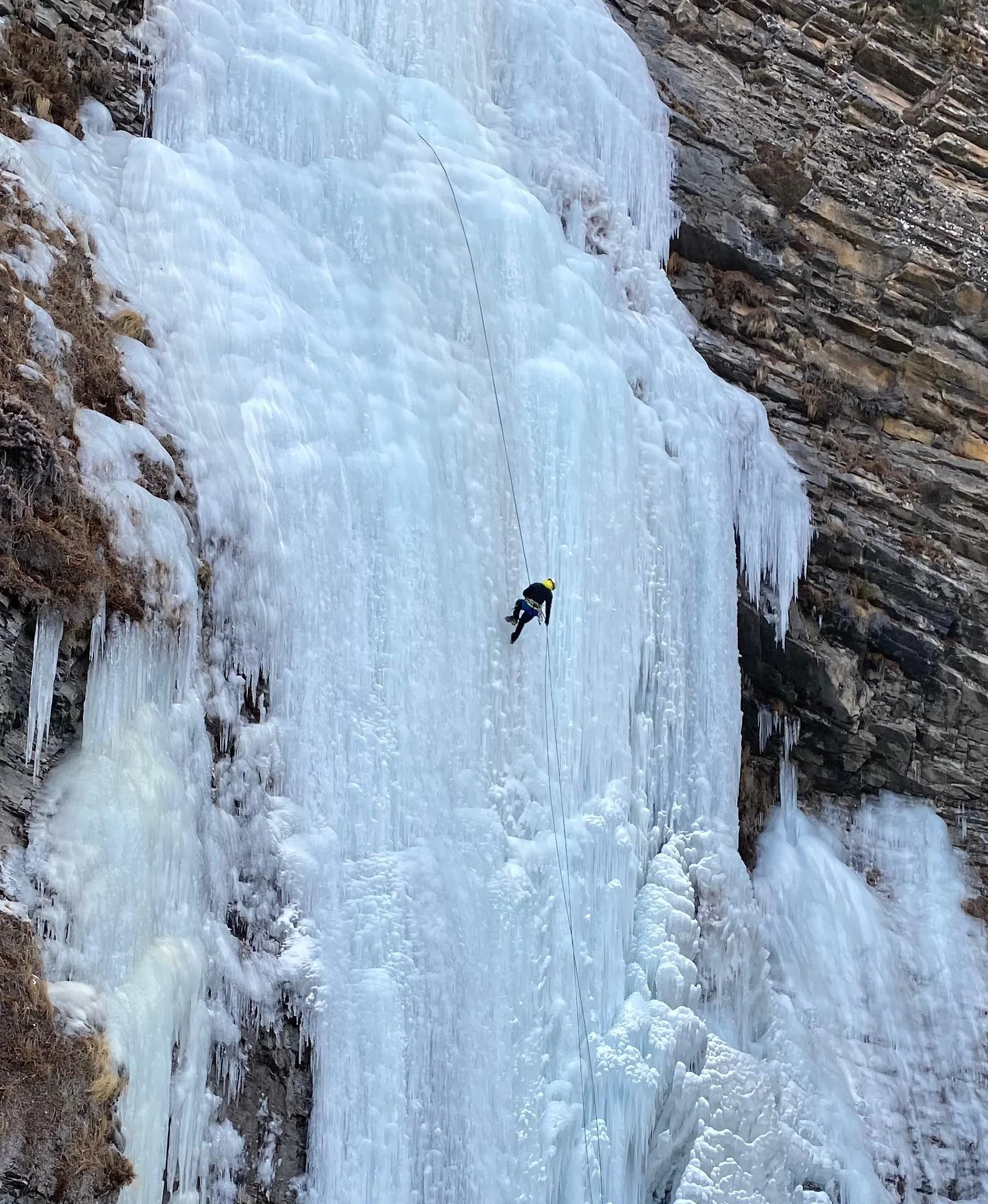
During winter and early spring, frozen waterfalls, ice walls, and alpine gullies around Humde create excellent natural training venues. These conditions closely resemble the ice and mixed terrain encountered on technical Himalayan peaks, allowing participants to train in an environment that directly translates to expedition climbing.
The high-altitude setting supports natural acclimatization, cold management, and efficient movement in mountain conditions. Compared to artificial or low-altitude venues, training in Manang offers a focused, quiet, and authentic Himalayan learning environment.