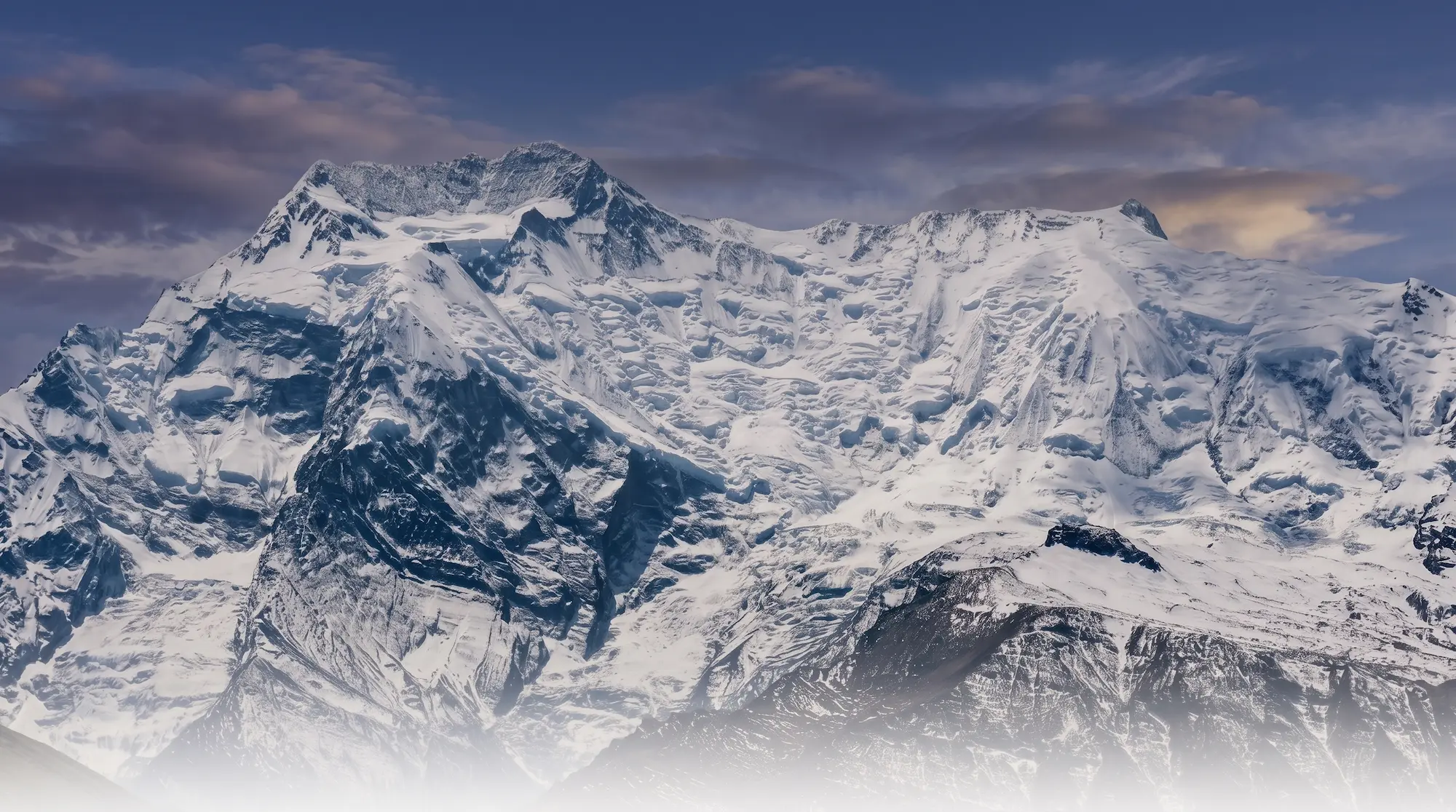
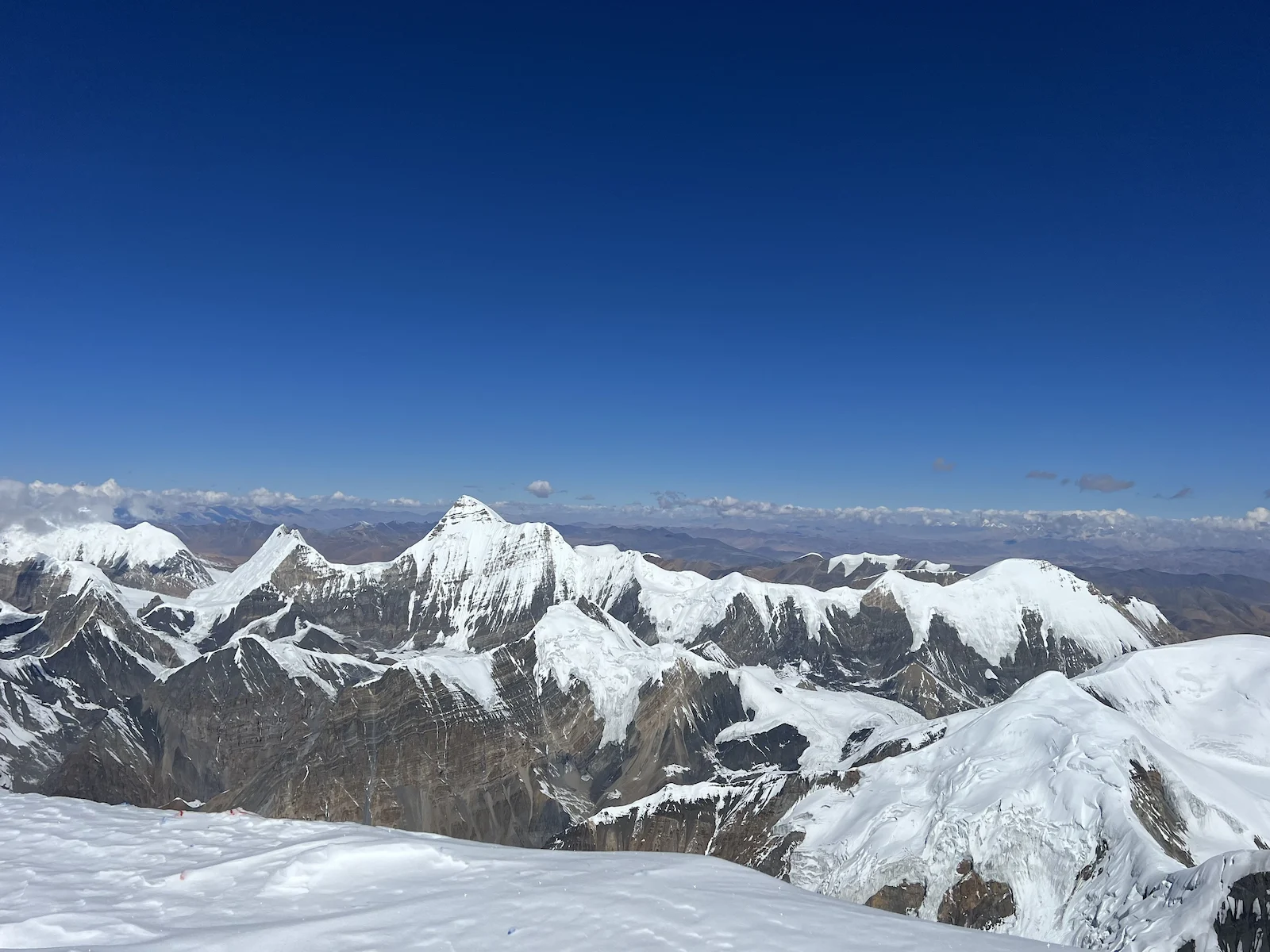
At a glance
| |
|
| Peak |
Annapurna IV, 7,525m / 24,688ft |
| Range |
Annapurna Himal, Gandaki Province, Nepal |
| Neighbours |
Annapurna III (west), Annapurna II (east) |
| First ascent |
30 May 1955: Steinmetz, Biller, Wellenkamp (Germany) |
| Route |
North West Ridge (classic) |
| Base Camp |
~4,800m, via Manang/Humde |
| Grade |
TD/TD+ (alpine) |
| Guide |
IFMGA/UIAGM certified mountain guide, 1:1 ratio |
| Season |
Autumn (fall) departures |
Why Climb Annapurna IV?
Annapurna IV occupies an interesting position among Nepal's high mountains. At 7,525m, it provides substantial altitude exposure while demanding considerably more than a straightforward high-altitude snow climb.
The Northwest Ridge involves steep climbing, exposed terrain, glacier travel and extensive use of fixed ropes. Current expedition descriptions commonly establish several high camps, with the exact number and position adjusted according to snow, weather and route conditions.
For a climber preparing for an eventual 8,000m expedition, the value of Annapurna IV is not simply its elevation. It is the combination of altitude and technical mountain skills.
You must be able to move efficiently with crampons, ascend fixed ropes with a jumar, descend safely, manage your equipment at altitude and make sound decisions when tired, cold and exposed.
That makes Annapurna IV particularly suitable for experienced mountaineers who want to move beyond entry-level Himalayan peaks and develop their technical ability at 7,000m.
The Annapurna IV Route
The expedition begins in Kathmandu and travels toward the Marsyangdi Valley, following the approach toward Manang.
The lower section of the journey uses established Annapurna Circuit infrastructure, allowing the team to acclimatize progressively before leaving the main trekking route for Annapurna IV Base Camp.
From the Manang/Humde area, the route becomes more remote and increasingly expedition-oriented. Base Camp is generally established at around 4,800m, after which the climbing route follows the North Face and Northwest Ridge.
Base Camp – approximately 4,800m
Base Camp becomes the main acclimatization and preparation point for the technical climb. The team checks equipment, reviews the route and prepares for the first rotation onto the mountain.
Base Camp to Camp 1
The lower section of the mountain introduces the team to steep snow and ice climbing and fixed-rope movement. Depending on conditions, this can involve sustained steep terrain requiring efficient crampon and ascender technique.
Camp 1 to Camp 2
The route continues toward the Northwest Ridge, with exposed sections and additional fixed-rope climbing. This is where technical efficiency becomes increasingly important: every movement at altitude consumes energy.
Camp 2 to Camp 3
Higher on the ridge, the terrain can become comparatively broader before steepening again toward the upper mountain. Expedition leaders may establish an additional high camp depending on conditions and the team's strategy.
Summit Push – 7,525m
The summit attempt begins according to weather, snow conditions and the team's acclimatization. The final section involves high-altitude climbing on exposed terrain before reaching the summit of Annapurna IV.
After reaching the summit, the team descends through the established camps before returning to Base Camp.
The exact camp strategy is not fixed in advance. Mountain conditions, weather, snow stability and the team's performance determine the safest and most efficient approach.
How Difficult Is Annapurna IV?
Annapurna IV should be treated as a serious technical 7,000m expedition.
It is not an entry-level trekking peak, and previous high-altitude experience alone is not enough. Climbers should be comfortable with:
- Crampon movement on steep snow and ice
- Jumar and fixed-rope ascent
- Controlled rappelling and descent
- Glacier travel
- Moving safely on exposed terrain
- Rope management
- Carrying a climbing pack at altitude
- Working efficiently in cold and windy conditions
- Making decisions under fatigue and altitude stress
Different expedition operators describe the route using slightly different Alpine grades, so rather than relying on a single grade, we assess Annapurna IV by the actual skills required on the mountain. Current descriptions consistently identify steep snow and ice, exposed ridge terrain and fixed-rope climbing as key characteristics of the route.
The mountain should therefore be approached as a technical progression for experienced mountaineers, not as a first major Himalayan climb.
Who Should Climb Annapurna IV?
Annapurna IV is designed for climbers who already have a strong foundation in mountaineering.
We recommend previous experience on 6,000m-class peaks or an equivalent technical alpine background, together with demonstrated competence in crampon and rope techniques.
A suitable candidate should be able to:
Climb:
Move confidently on snow, ice and mixed terrain.
Use equipment:
Efficiently operate crampons, ice axe, ascender, descender and other personal climbing equipment.
Handle altitude:
Have previous experience living and climbing at significant altitude.
Carry a load:
Remain physically efficient while carrying personal and climbing equipment.
Work as a team:
Follow rope systems, climbing protocols and expedition decisions.
For climbers without sufficient technical experience, we recommend completing an appropriate mountaineering training programme or a progression of technical peaks before attempting Annapurna IV.
Annapurna IV as Preparation for Everest
Annapurna IV can be valuable preparation for climbers with an eventual Everest objective because it combines 7,500m-class altitude with technical climbing.
The experience gained includes:
- High-altitude acclimatization
- Fixed-rope efficiency
- Crampon technique
- Ascender and descender use
- Technical climbing while fatigued
- High-altitude camp management
- Summit-push decision making
- Exposure to severe Himalayan weather
- Efficient movement on steep terrain
These skills are transferable to demanding sections of larger Himalayan objectives, including fixed-rope climbing and technical movement encountered during an Everest expedition.
What about Nepal's proposed 7,000m Everest requirement?
Nepal has been moving toward tighter experience requirements for Everest climbers, including a proposed requirement concerning prior ascent of a 7,000m peak in Nepal. However, the exact legal status and implementation of such a requirement must be confirmed for the relevant Everest season before it is presented as a current permit condition.
If the requirement is legally effective and applies to your Everest permit, Annapurna IV's 7,525m elevation is above the proposed 7,000m threshold. Climbers should nevertheless confirm their individual eligibility with the Nepal Department of Tourism before relying on an Annapurna IV summit for a future Everest application.
The important point is that Annapurna IV offers more than a qualifying altitude: it provides genuine technical high-altitude experience.
Annapurna IV vs. Other 7,000m Peaks
There is no single "best" 7,000m mountain for every climber. Different peaks provide different types of experience.
Manaslu, at 8,163m, provides greater altitude exposure and is itself an 8,000m expedition. It is therefore a natural objective for climbers specifically seeking 8,000m experience.
Himlung Himal, at 7,126m, is another established Himalayan expedition and can be an appropriate progression for climbers developing high-altitude experience.
Annapurna IV, at 7,525m, places greater emphasis on technical movement along the North Face and Northwest Ridge, including steep snow and ice, fixed-rope climbing and exposed ridge terrain.
For climbers whose priority is developing technical mountaineering skills at 7,000m, Annapurna IV provides a particularly compelling objective.
A Quieter Side of the Annapurna Himal
Although the Annapurna Circuit is one of Nepal's best-known trekking routes, Annapurna IV itself receives far less climbing attention than the region's major commercial peaks.
The Himalayan Database records 146 expedition groups and 894 members in its current Annapurna IV statistics, with five recorded deaths.
That history does not make the mountain easy or risk-free. It simply means that Annapurna IV does not have the same level of commercial climbing traffic associated with some of Nepal's more popular expedition peaks.
For climbers who value a more focused mountain experience, that relative quiet is part of its appeal.
Acclimatization Strategy
Successful high-altitude climbing begins well before the summit attempt.
The approach through the Marsyangdi Valley allows the team to gain altitude progressively, with time around Manang before moving toward Base Camp.
Once at Base Camp, the expedition uses climbing rotations to expose the team to progressively higher elevations before the summit attempt.
A typical strategy may involve:
Rotation 1:
Base Camp → Camp 1 → higher on the route/camp 2 → Base Camp
Rotation 2:
Base Camp → Camp 1 → Camp 2 / camp 3 → Base Camp
Summit Rotation:
Base Camp → high camps → Summit → descent
The actual strategy is adjusted according to weather, snow conditions, individual acclimatization and the expedition leader's assessment.
There is no advantage in forcing a predetermined schedule when the mountain is telling you otherwise.
Our Approach to Annapurna IV
At Climb Himalayas, we approach Annapurna IV as a mountaineering expedition rather than a standard commercial trekking package.
Our expedition philosophy is based on:
Experienced Mountain Leadership
The expedition is led by an IFMGA/UIAGM-certified mountain guide, with climbing decisions based on mountain conditions, team performance and safety rather than a rigid itinerary.
Small-Team Approach
We favor manageable expedition groups that allow the climbing team to move efficiently and receive appropriate attention during technical sections and high-altitude rotations.
Technical Preparation
Before departure, climbers should understand the technical demands of the route and be comfortable with the equipment and techniques they will use above Base Camp.
Flexible Expedition Strategy
High-altitude climbing cannot be planned entirely from a spreadsheet. Weather, snow conditions, route changes and individual acclimatization can all affect the schedule.
Our climbing strategy therefore remains flexible while maintaining clear safety objectives.
Local Ground Support
Because Climb Himalayas operates from Nepal, we coordinate the expedition logistics directly from Kathmandu, including transportation, permits, accommodation, trekking arrangements, Base Camp logistics and mountain support.
Best Time to Climb Annapurna IV
Annapurna IV can be approached during the principal Himalayan climbing seasons of spring and autumn.
Spring generally offers climbing opportunities during April and May, while autumn provides another potential window around October and November. Current expedition operators identify both seasons as viable, with weather and wind conditions on the upper ridge playing an important role in summit timing.
For every departure, the final climbing window depends on actual mountain conditions rather than the calendar alone.
How Long Is the Annapurna IV Expedition?
A complete Annapurna IV expedition normally requires several weeks, including:
- Arrival and preparation in Kathmandu
- Approach through the Marsyangdi Valley
- Acclimatization
- Trek to Base Camp
- Technical climbing rotations
- Summit attempt
- Weather contingency
- Descent and return to Kathmandu
The exact duration depends on the expedition strategy, transportation arrangements, acclimatization requirements and weather conditions.
Climb Himalayas offers a detailed day-by-day itinerary and contingency plan for each departure.
Permits and Expedition Logistics
Annapurna IV is a government-regulated mountaineering peak. Expedition logistics generally include the relevant mountaineering permit, conservation-area entry arrangements, liaison and expedition administration, together with transportation and mountain support.
Nepal's existing mountaineering regulations provide for expedition permits, government-issued climbing certificates and specific requirements for expedition teams.
Your final expedition quotation should clearly distinguish between:
Included:
Permits and logistics specifically covered by the package.
Excluded:
International flights, personal insurance, personal climbing equipment and other individual expenses.
Climb Himalayas provides a detailed inclusion and exclusion list with the expedition quotation so that the total cost is transparent before booking.
Supplemental Oxygen
Annapurna IV is high enough that oxygen strategy must be considered carefully.
Supplemental oxygen is not a substitute for acclimatization, fitness or sound expedition management. Whether oxygen is carried or used should be determined by the expedition's operational plan, the climber's condition, route conditions and the mountain guide's assessment.
Our final oxygen policy, including whether oxygen is standard, optional or reserved for emergency use should be confirmed in the expedition service agreement before departure.
Safety and Risk Management
No 7,500m mountain can be described as risk-free.
The principal challenges include:
- High-altitude illness
- Extreme cold
- Strong winds
- Rapid weather changes
- Steep snow and ice
- Falling ice or rock
- Avalanche conditions
- Crevasse and glacier hazards
- Exhaustion
- Technical climbing accidents
Our approach is therefore based on preparation, acclimatization, experienced leadership, conservative decision-making and contingency planning.
The objective is not simply to reach the summit. It is to make sound decisions throughout the expedition and return safely.
Annapurna IV Expedition Cost
The cost of an Annapurna IV expedition depends on the level of mountain support, team size, guide and Sherpa ratio, transportation, accommodation, permits, Base Camp services, equipment and expedition duration.
Climb Himalayas provides a transparent expedition quotation based on the actual level of service required rather than a generic package price.
For climbers arranging some services independently, we can also discuss a more customized expedition structure where operationally possible.
Contact us for the current Annapurna IV Expedition cost and a detailed inclusion/exclusion list.