Is a Guided Manaslu Climb Right for a First 8000m? The Complete Guide to a Guided Manaslu Climb in Nepal.
So you've ticked a few 6000 m peaks. Maybe you've stood on the roof of Island Peak, stomped up Mera, or even pushed to the high camps on Aconcagua. And now there's this quiet, persistent voice in your head whispering something a little terrifying: "It's time for an eight-thousander."
Manaslu. That name keeps coming up.
At 8,163 metres, it's the eighth-highest mountain on Earth — and honestly, for a lot of serious high-altitude climbers, it's the smartest first 8000 m objective on the planet. Not because it's easy (nothing in the death zone is), but because a well-run guided Manaslu expedition Nepal gives you a realistic shot at the summit without throwing you into the circus that Everest has become.
This guide covers everything. Cost, permits, itinerary, gear, choosing an operator, oxygen policy, acclimatization strategy — the works. Let's go
Why Manaslu? The Case for the World's 8th Highest Peak
Before we dive into logistics, let's settle the obvious question: why Manaslu over Everest?
Here's the honest comparison:
|
Factor |
Manaslu |
Everest |
|
Altitude |
8,163 m |
8,849 m |
|
Permit Cost |
~$3,000 USD |
$11,000+ USD |
|
Technical Difficulty |
Moderate |
Moderate–High |
|
Crowd Level |
Low–Moderate |
Very High |
|
Route Exposure |
Less crowded fixed lines |
Bottlenecks on Hillary Step |
|
Guided Package Cost |
$10,000–$30,000 |
$45,000–$130,000+ |
That's not even a close call on value. Manaslu is generally considered easier than Everest — lower altitude, a less technical route, far fewer climbers competing for weather windows, and a permit that doesn't cost a mortgage payment. Yet you're still standing in the death zone on a genuine 8000 m peak. The credibility is real.
How Difficult Is a Guided Manaslu Climb?
Let's be straight with you: this is not a trek with crampons. A guided Manaslu climb sits firmly in the intermediate-advanced mountaineering category.
You should show up with:
- Prior experience above 6,000 m — ideally a 7,000 m summit (Aconcagua at 6,961 m is a strong baseline; Denali even better)
- Glacier travel and crampon technique — you'll be on glaciated terrain for weeks
- Fixed-rope ascending proficiency — the Petzl Ascension handled ascender becomes your best friend on the upper mountain
- High-altitude camping comfort — meaning you've spent nights above 6,000 m and know how your body responds
Most reputable operators will review your climbing CV before accepting you. If you haven't done a 7,000 m peak, some will ask you to do one first. That's not gatekeeping — that's them protecting your life.
When to Go: Best Season for a Guided Manaslu Climb
Autumn (September–October) is the sweet spot. Most experienced operators and Sherpas agree: autumn delivers more stable weather windows than spring, with reduced avalanche risk in the critical upper-mountain sections.
- Generally preferred. Colder, yes — but more predictable high-pressure windows after the monsoon clears. Summit success rates trend slightly higher in autumn on recent seasons.
The short version? Book an autumn guided Manaslu expedition if your schedule allows it
How Long Does a Guided Manaslu Climb Take?
Block out 5–6 weeks minimum on your calendar. Here's what a typical guided Manaslu climbing itinerary looks like:
Sample 45-Day Itinerary
Days 1–3: Arrive Kathmandu. Permits, gear sorting, team briefing, rest.
Days 4–8: Drive/fly to Arughat or Soti Khola, then begin the approach trek through Tsum Valley — one of the most beautiful approach marches in the Himalayas.
Days 9–14: Trek to Manaslu Base Camp (~4,800 m). Allow time for your body to feel the altitude.
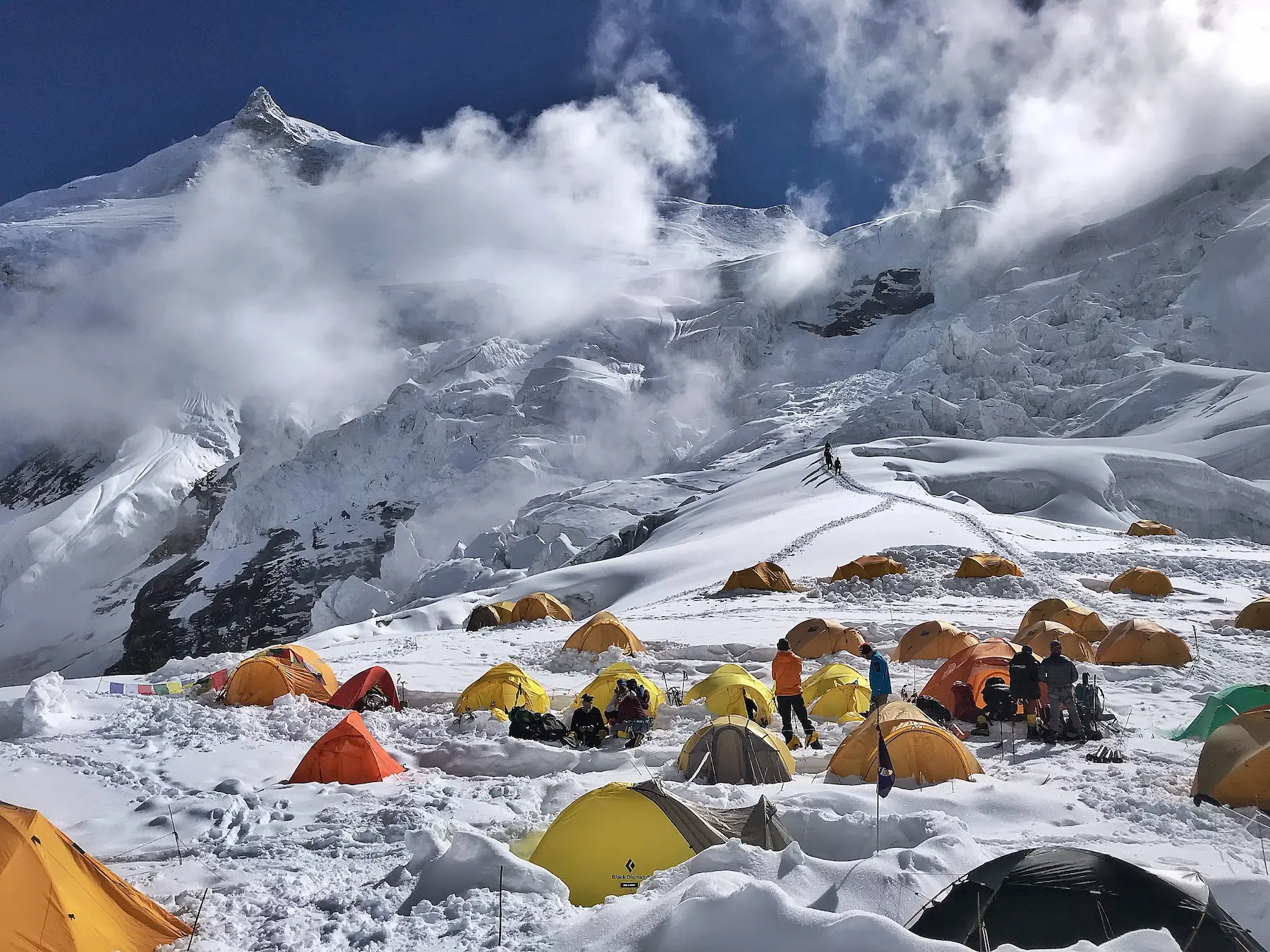
Days 15–30: Acclimatization rotations. You'll push to Camp 1 (~5,700 m), Camp 2 (~6,400 m), and ideally Camp 3 (~7,000 m) before descending back to Base Camp for rest. Operators typically run 2–3 rotation cycles.
Days 31–40: Summit push. Weather windows are everything here. Expect to wait. Be patient. Trust your guide team's read on the barometric pressure.
Days 41–45: Descent, trek out, Kathmandu debrief, flight home.
Good operators build in 1–2 extra summit-window days. If the weather refuses to cooperate, they may extend base camp stays or, in rare cases, recommend aborting the push. That call — the hardest call in mountaineering — is why you hire a great guide.
What Does a Guided Manaslu Climb Cost?
The honest answer: it depends enormously on what you're buying.
Here's the breakdown of the typical pricing tiers:
|
Package Type |
Typical Cost (USD) |
What's Usually Included |
|
Budget / Base Camp Service |
$10,000–$15,000 |
Permit, BC logistics, cook tent; guide and you manage your camp and high camp logistics yourself |
|
Standard Guided |
$15,000–$25,000 |
Full guide, Sherpa support, fixed ropes, some oxygen |
|
Full-Service Premium |
$25,000–$50,000+ |
IFMGA guide, dedicated Sherpa, full oxygen allocation, BC comforts |
|
Luxury Expedition |
$50,000–$125,000+ |
Private guide, premium gear loan, satellite comms, helicopter options |
The guided Manaslu climbing cost sweet spot for most experienced alpinists? $18,000–$30,000 gets you a well-run operation with competent Sherpas, established fixed lines, and enough oxygen to manage the summit push responsibly.
What drives costs up:
- Private vs. group expedition
- Number of Sherpa carries to high camp
- Oxygen allotment (more bottles = higher cost)
- Helicopter rescue insurance arrangements
- Kathmandu hotel nights and flights
Always, always ask operators for a detailed inclusions list before signing. The difference between a $12,000 and a $25,000 package often comes down to whether high-camp oxygen and dedicated Sherpa support are included.
Permits Required for a Guided Manaslu Climb
Nepal's permit system isn't complicated, but you can't skip any of it:
- Manaslu Climbing Permit — ~$3,000 USD (autumn season). Issued through the Nepal Mountaineering Association (NMA).
- Manaslu Conservation Area Permit (MCAP) — roughly NPR 3,000 (~$22 USD)
- TIMS Card (Trekker's Information Management System)
- Special Restricted Area Permit — Manaslu sits in a restricted zone; group permits required (minimum 2 climbers)
- Liaison Officer fee — Nepal government requires a liaison officer for 8000 m expeditions
Your operator handles all of this. But verify it's included in your contract. Some budget operators quote the package price excluding government fees — a sneaky gap that can cost you thousands.
Choosing the Best Company for a Guided Manaslu Climb
This is arguably the most important decision you'll make. The mountain is the mountain — but your operator determines whether you're set up to succeed or set up to suffer.
Green flags to look for:
- IFMGA-certified guides or equivalent national credentials
- Transparent plannig — ask for proper plannings and preparedeness
- Experienced leader/guide (head Sherpa) with multiple Manaslu ascents
- Detailed oxygen policy — how many bottles, what altitude they deploy, options to purchase additional
- Fixed-rope commitment — does your fee include contribution to fixing the route, or are you riding on other teams' ropes?
- Medical protocols and risk assesments — what plan they have at emergency situation, evecuation , risk of weather and avalnces
- Include & excludes : check what you get with the value provided. Cheap price can have many hidden cost
Ask them directly: "What happens if a client develops HACE or HAPE at Camp 2?" Their answer tells you everything
Oxygen on Manaslu: What You Actually Need to Know
Supplemental oxygen is not mandatory on Manaslu, but let's be honest: most guided climbers use it above Camp 3 (roughly 7,400 m), and for good reason.
The standard guided approach:
- Most packages include 2–4 bottles of supplemental O₂
- Oxygen is typically deployed above ~7,400 m (Camp 3 and summit push)
- Flow rate: 2–3 litres/min for sleep; 3–4 L/min on the summit push
- Sherpas managing your O₂ system is part of why you're paying for a guide
Attempting Manaslu without oxygen dramatically increases your risk of HACE, HAPE, and frostbite, and slows your pace on summit day to the point where weather can become a life-threatening factor. The no-O₂ attempt on an 8000 m peak is a pursuit for elite, very experienced high-altitude climbers — not first-timers on the mountain.
Essential Gear for a Guided Manaslu Expedition
Your operator will provide a gear list. Here's what separates climbers who summit from those who turn around:
Footwear
Your boots are your most critical piece of equipment. Don't cheap out.
- La Sportiva G2 Gore-Tex 8000 — Triple-layer, warm, incredibly durable. One of the most trusted boots on 8000 m peaks worldwide.
- Scarpa Phantom 8000 — Double boot with removable inner; preferred by many Manaslu Sherpas for its extreme cold performance on long summit days.
- Millet Everest Summit GTX — Excellent warmth-to-weight ratio; a reliable choice that many European operators recommend.
- La Sportiva Olympus Mons Cube — The gold standard for summit-day conditions; maximum warmth and protection.
Protection
- Petzl Element Climbing Helmet — Lightweight and low-profile with excellent ventilation. Essential for icefall zones and fixed-rope sections.
- Black Diamond Vision MIPS — Designed specifically for 8000 m use; headlamp-compatible and goggle-compatible.
Ice Axes & Crampons
- Black Diamond Raven Pro Ice Axe — Technical mountaineering axe ready for Manaslu's glacier travel and steep snow sections.
- Petzl Summit Ice Axe — Lightweight alpine axe built for glacier travel and classic mountaineering approaches.
- Petzl Vasak Crampons — Classic lever-lock mountaineering crampons compatible with all major 8000 m boots.
Ascent & Belay
- Petzl Ascension Ascender — The handled ascender you'll trust with your life on fixed ropes. Efficient, grippy, cold-weather reliable.
- Black Diamond ATC Guide — Most versatile belay/rappel device; standard on 8000 m expeditions.
- Petzl Altitude Harness — Light and comfortable for long glacier-travel days and high-camp work.
Illumination
- Petzl Duo RL Headlamp — 2,800 lumens, rechargeable. Summit day starts at 1–2 AM; you need this.
- Black Diamond ICON 700 — Compact, brutally reliable in extreme cold; base camp and acclimatization standard.
Summit Suit & Sleep System
- Black Yak Watusi Down Suit — One-piece 8000 m suit; extremely warm and windproof. Used by serious Himalayan climbers globally.
- Kailas Summit Down Suit — High-altitude suit designed for 8000 m; popular with many Asian-based Manaslu teams.
- Western Mountaineering Bison GWS (−40°C) — The sleeping bag that serious 8000 m climbers trust. Built for the most extreme mountaineering conditions on Earth.
- Therm-a-Rest NeoAir XTherm — High R-value inflatable mattress. The difference between sleeping and shivering at Base Camp.
Safety & Communication
- Garmin inReach Mini 2 — The world's most reliable satellite communicator for high-altitude expeditions. Two-way messaging, SOS, and weather tracking from the death zone. Non-negotiable.
Guided Manaslu Climbing Safety: What You Need to Understand
Guided expeditions reduce risk — but they don't eliminate it. Manaslu has claimed lives, including in recent seasons. The mountain has a documented history of avalanche events on the Northeast Face, and summit-day weather can deteriorate faster than forecast models predict.
What a good guide team provides:
- Route-finding on complex glaciated terrain
- Fixed rope maintenance on key sections
- Weather-window analysis from multiple forecast sources (MeteoBlue, Mountain Forecast, and direct Sherpa network communication)
- On-mountain medical response — oxygen, dexamethasone, evacuation protocols
What you must bring yourself:
- Expedition insurance — high-altitude coverage including search & rescue and helicopter evacuation to at least 8,000 m. This is non-negotiable. Ask your operator which policies they recommend; many require proof of coverage before you leave Kathmandu.
- Fitness — you should comfortably hike 6–8 hours with a 10–15 kg pack before arriving. On summit day, your pack will weigh 8–12 kg with oxygen, layers, water, and gear.
- Mental resilience — summit fever kills people. Your guide says turn around? You turn around.
Guided Manaslu Climb vs. Annapurna: Which Is Better for You?
This comes up constantly. Here's the honest take:
|
Manaslu |
Annapurna |
|
|
Altitude |
8,163 m |
8,091 m |
|
Death Rate |
Lower |
One of the highest of any 8000 m peak |
|
Technical Difficulty |
Moderate |
Moderate–High (avalanche-prone) |
|
Permit Cost |
~$3,000 |
~$3,000 |
|
Guided Package Cost |
Similar |
Similar |
|
Best For |
First 8000 m climbers |
Experienced, avalanche-aware alpinists |
For a first guided 8000 m climb, Manaslu wins on consistency and relative safety. Annapurna's avalanche exposure on the approach and summit route is genuinely severe; it has one of the highest fatality rates of any 8000 m peak. Respect it accordingly.
Frequently Asked Questions
How difficult is a guided Manaslu climb? Intermediate–advanced. You need strong fitness, prior experience above 6,000–7,000 m, and solid crampon/rope skills. Not for beginners.
Do I need previous 8000 m experience? No, but most operators strongly recommend at least one 7,000 m summit beforehand. Your climbing CV matters.
How long does a guided Manaslu expedition take? Typical itineraries run 5–6 weeks, covering Kathmandu arrival, the approach trek, acclimatization rotations, summit push, and descent.
What is the best season? Autumn (September–October) is generally preferred for more stable weather windows. Spring is also viable.
How much does a guided Manaslu climb cost? Packages range from ~$10,000 (base camp service level) up to $125,000+ for fully private, luxury-guided expeditions. Most climbers find the $18,000–$30,000 range covers a well-supported experience.
Are permits required? Yes: Manaslu Climbing Permit (~$3,000), MCAP, TIMS card, Special Restricted Area Permit, and a Liaison Officer arrangement.
Do I need supplemental oxygen? Not mandatory, but most guided climbers use it above ~7,400 m. Most packages include 2–4 bottles. Attempting without O₂ dramatically raises risk.
Is Manaslu easier than Everest? Generally yes — lower altitude, less technical route, far lower permit cost, and significantly less crowd-related risk. Both are serious death-zone peaks.
How heavy is my pack on summit day? Expect 8–12 kg, carrying oxygen, extra layers, water, food, and safety gear.
What if bad weather delays the summit attempt? Good operators build in 1–2 extra window days. If conditions remain unsafe, they may extend base camp stays or call off the summit push.
Can I join as a solo climber? Yes — most operators accept solo climbers joining group expeditions, with shared base camp infrastructure.
Do I need insurance? Absolutely. High-altitude expedition insurance with helicopter evacuation coverage to at least 8,000 m is essential.
The Bottom Line
Here's the thing about Manaslu: it earns respect. Not because it's the tallest or the most technically savage — but because every climb into the death zone demands something real from you. Fitness, judgment, patience, and the humility to trust your guide when they call a turnaround.
A well-chosen guided Manaslu expedition gives you genuine infrastructure — fixed ropes, Sherpa support, weather monitoring, oxygen protocol — built around a mountain that rewards preparation over bravado.
Do the 7,000 m peak first. Train seriously. Choose an operator with a track record. Invest in your boots and your sleep system. And when you're standing on that summit at 8,163 m with the entire Himalayan horizon spread out beneath you, you'll understand exactly why this mountain keeps calling people back.
The mountain is ready when you are.
Ready to start planning? Reach out to certified expedition operators in Kathmandu, get your climbing CV in order, and start researching your acclimatization peak for the season before Manaslu. The eighth-highest mountain on Earth isn't going anywhere — but your summit window is finite.